
Jurui, Cashew Beyond Nut and Shell: Weaving Material Relations Across People, Place, and Culture.
DOI:
https://doi.org/10.46516/inmaterial.v10.323Keywords:
cashew, relational materiality, participatory design, sustainable value chains, material-driven innovationAbstract
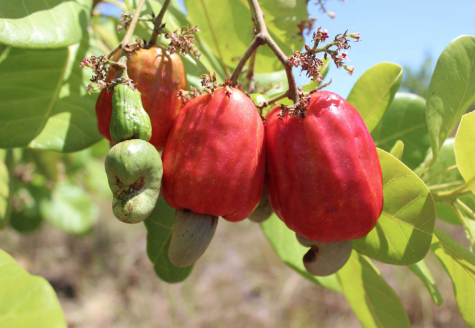
This article investigates the cashew nut and its by-products not merely as agricultural resources but as active materials whose relational properties influence both human practices and ecological systems in the Vichada region of Colombia. Employing a material-centred and participatory design methodology that integrates co-design with local communities, laboratory experimentation, and field testing, the project examines the transformation of cashew shells and cashew nutshell liquid into viable materials for sustainable development. The study identifies new applications such as natural coatings, material composites, ergonomic packaging tools, and safety processing machinery, that enhance local processing practices while fostering economic resilience. By situating design as a relational practice that connects material, territory, and culture, this work advances a model of innovation grounded in local knowledge and ecological interdependence.
Downloads
References
-Abdul Salam, M., & Peter, K. V. (2010). Cashew: A monograph. Studium Press.
-Andonaba, J.-B., Lompo, S., Ouédraogo, V., Ouédraogo, F., Ouédraogo, M., Konaté, I., Diallo, B., & Traore, A. (2017). Skin damage and aesthetic disadvantage observed in women in the hand craft shelling chain of cashew nuts in a factory in Bobo-Dioulasso, Burkina Faso. Journal of Cosmetics, Dermatological Sciences and Applications, 7(3), 211–220. https://doi.org/10.4236/jcdsa.2017.73020
-ASTM International. (2017). Standard test method for tensile properties of polymer matrix composite materials (ASTM D3039/D3039M-17). ASTM International. https://doi.org/10.1520/D3039_D3039M-17
-ASTM International. (2016). Standard test method for rubber property—Durometer hardness (ASTM D2240-15e1). ASTM International. https://doi.org/10.1520/D2240-15E01
-Azwa, Z. N., Yousif, B. F., Manalo, A. C., & Karunasena, W. (2013). A review on the degradability of polymeric composites based on natural fibres. Materials & Design, 47, 424–442. https://doi.org/10.1016/j.matdes.2012.11.025
-Bell, M., & Pavitt, K. (1993). Technological accumulation and industrial growth: Contrasts between developed and developing countries. Industrial and Corporate Change, 2(2), 157–210. https://doi.org/10.1093/icc/2.2.157
-Berry, A. D., & Sargent, S. A. (2011). Cashew apple and nut (Anacardium occidentale L.). In E. M. Yahia (Ed.), Postharvest biology and technology of tropical and subtropical fruits (pp. 414–423). Woodhead Publishing.
-Bogoeva-Gaceva, G., Avella, M., Malinconico, M., Buzarovska, A., Grozdanov, A., Gentile, G., & Errico, M. E. (2007). Natural fiber eco-composites. Polymer Composites, 28(1), 98–107. https://doi.org/10.1002/pc.20270
-Bratteteig, T., Bødker, K., Dittrich, Y., Mogensen, P. H., & Simonsen, J. (2012). Methods: Organising principles and general guidelines for participatory design projects. In J. Simonsen & T. Robertson (Eds.), Routledge international handbook of participatory design (pp. 117–144). Routledge. https://doi.org/10.4324/9780203108543
-Braungart, M., & McDonough, W. (2002). Cradle to cradle: Remaking the way we make things. North Point Press.
-Camburn, B., Viswanathan, V., Linsey, J., Anderson, D., Jensen, D., Crawford, R., & Wood, K. (2017). Design prototyping methods: State of the art in strategies, techniques, and guidelines. Design Science, 3, e13. https://doi.org/10.1017/dsj.2017.10
-Castello, L., McGrath, D. G., Hess, L. L., Coe, M. T., Lefebvre, P. A., Petry, P., Macedo, M. N., Renó, V. F., & Arantes, C. C. (2013). The vulnerability of Amazon freshwater ecosystems. Conservation Letters, 6(4), 217–229. https://doi.org/10.1111/conl.12008
-Centro de Estudios de la Orinoquía de la Universidad de los Andes, & Corporación Colombiana de Investigación Agropecuaria (CORPOICA). (2015). Proyecto MAS Marañón: Oportunidades para el fortalecimiento de la cadena productiva del marañón en el departamento del Vichada.
-Clímaco, J., Guevara, E., Navas, A., & Arango, L. (2016). Corpoica Mapiria Ao1, Corpoica Yopare Ao2, Corpoica Yucao Ao3: Cashew clones for the flat highlands of the Colombian Orinoquía. Colombian Corporation for Agricultural Research – Agrosavia. https://repository.agrosavia.co/handle/20.500.12324/11535
-Corona, A., Madsen, B., Hauschild, M. Z., & Birkved, M. (2016). Natural fibre selection for composite eco-design. CIRP Annals, 65(1), 13–16. https://doi.org/10.1016/j.cirp.2016.04.032
-Crang, M. (2003). Qualitative methods: Touchy, feely, look-see? Progress in Human Geography, 27(4), 494–504. https://doi.org/10.1191/0309132503ph445pr
-Crosby, A. W. (2003). The Columbian exchange: Biological and cultural consequences of 1492 (30th anniversary ed.). Praeger.
-da Silva, V. M. F., Brum, S. M., Magalhães Drummond de Mello, D., de Souza Amaral, R., Gravena, W., Campbell, E., da S. Gonçalves, R., & Mintzer, V. (2023). The Amazon River dolphin, Inia geoffrensis: What have we learned in the last two decades of research? Latin American Journal of Aquatic Mammals, 18(1), 139–157. https://doi.org/10.5597/lajam00298
-Das, I., & Arora, A. (2017). Post-harvest processing technology for cashew apple – A review. Journal of Food Engineering, 194, 87–98. https://doi.org/10.1016/j.jfoodeng.2016.09.011
-de Brito, E. S., de Oliveira Silva, E., & Rodrigues, S. (2018). Caju—Anacardium occidentale. In S. Rodrigues, E. de Oliveira Silva, & E. S. de Brito (Eds.), Exotic fruits (pp. 85–89). Academic Press. https://doi.org/10.1016/B978-0-12-803138-4.00012-5
-Duarte Poblete, S. S., Romani, A., & Rognoli, V. (2024). Emerging materials for transition: A taxonomy proposal from a design perspective. Sustainable Futures, 7, Article 100155. https://doi.org/10.1016/j.sftr.2024.100155
-Eberle, B. (1996). Scamper: Games for imagination development. Prufrock Press.
-Ellen MacArthur Foundation. (2013). Towards the circular economy. Volume 1: An economic and business rationale for an accelerated transition. Ellen MacArthur Foundation.
-Food and Agriculture Organization (FAO). (2021a). FAOSTAT data: Crops, cashew nuts, with shell. https://data.un.org/Data.aspx?d=FAO&f=itemCode%3A217
-Food and Agriculture Organization of the United Nations (FAO). (2021b). The state of the world’s land and water resources for food and agriculture – Systems at breaking point. FAO. https://openknowledge.fao.org/server/api/core/bitstreams/ecb51a59-ac4d-407a-80de-c7d6c3e15fcc/content
-Fu, S.-Y., Feng, X.-Q., Lauke, B., & Mai, Y.-W. (2008). Effects of particle size, particle/matrix interface adhesion and particle loading on mechanical properties of particulate–polymer composites. Composites Part B: Engineering, 39(6), 933–961. https://doi.org/10.1016/j.compositesb.2008.01.002
-Gopal, S., & Clarke, T. (2015). System mapping: A guide to developing actor maps. FSG. http://www.nonprofitjourney.org/uploads/8/4/4/9/8449980/final_system_mapping_guide.pdf
-Gobierno Departamental del Vichada, Secretaría de Planeación y Desarrollo Territorial. (2020). Plan departamental de desarrollo “Trabajo para todo Vichada” 2020–2023. https://vichada.micolombiadigital.gov.co/sites/vichada/content/files/000331/16528_plan-de-desarrollo-aprobado-ordenanza.pdf
-Hunt, J. D., Pokhrel, Y., Chaudhari, S., Mesquita, A. L. A., Nascimento, A., Leal Filho, W., Biato, M. F., Schneider, P. S., & Lopes, M. A. (2022). Challenges and opportunities for a South America waterway system. Cleaner Engineering and Technology, 11, 100575. https://doi.org/10.1016/j.clet.2022.100575
-Idah, P., Imologie, S., & M. A., M. (2014). Extraction and characterization of cashew nut (Anacardium occidentale) oil and cashew shell liquid oil. Academic Research International, 5, 50–54.
-Karana, E., Barati, B., Rognoli, V., & Zeeuw van der Laan, A. (2015). Material driven design (MDD): A method to design for material experiences. International Journal of Design, 9(2), 35–54. https://www.ijdesign.org/index.php/IJDesign/article/view/1965
-Mazzetto, S. E., Lomonaco, D., & Mele, G. (2009). Cashew nut oil: Opportunities and challenges in the context of sustainable industrial development. Química Nova, 32(3), 732–741. https://doi.org/10.1590/S0100-40422009000300017
-Mesa, J. A., Sierra-Fontalvo, L., Ortegon, K., & Gonzalez-Quiroga, A. (2024). Advancing circular bioeconomy: A critical review and assessment of indicators. Sustainable Production and Consumption, 46, 324–342. https://doi.org/10.1016/j.spc.2024.03.006
-Moore, E., & Garzón, C. (2010). Social cartography: The art of using maps to build community power. http://www.friendsofrpe.org/files/Moore.Garzon.17-2.pdf
-Orduz-Rodríguez, J., & Rodríguez-Polanco, E. (2022). The cashew (Anacardium occidentale L.): A crop with productive potential – Technological development and perspectives in Colombia. Agronomía Mesoamericana, 33(2), 24–41. https://www.scielo.sa.cr/pdf/am/v33n2/2215-3608-am-33-02-00024.pdf
-Ortiz-Barajas, D. L., Arévalo-Prada, J. A., Fenollar, O., Rueda-Ordóñez, Y. J., & Torres-Giner, S. (2020). Torrefaction of coffee husk flour for the development of injection-moulded green composite pieces of polylactide with high sustainability. Applied Sciences, 10(18), 6468. https://doi.org/10.3390/app10186468
-Padmanabhan, A. V. S., & Takalkar, A. R. (2018). Synthesis and characterization of cashew nut shell liquid matrix compositions for composite applications. In Biopolymers and biomaterials. Apple Academic Press.
-Parisi, S., Rognoli, V., & Ayala-Garcia, C. (2016). Designing materials experiences through passing of time: Material driven design method applied to mycelium-based composites. In Proceedings of D&E 2016: 10th International Conference on Design and Emotion – Celebration and Contemplation (pp. 239–255). Design and Emotion Society.
-Parisi, S., Rognoli, V., & Sonneveld, M. (2017). Material tinkering: An inspirational approach for experiential learning and envisioning in product design education. The Design Journal, 20(S1), S1167–S1184. https://doi.org/10.1080/14606925.2017.1353059
-Patel, R. N., Bandyopadhyay, S., & Ganesh, A. (2006). Economic appraisal of supercritical fluid extraction of refined cashew nut shell liquid. Journal of Chromatography A, 1124(1–2), 130–138. https://doi.org/10.1016/j.chroma.2006.06.015
-Pollini, B., & Rognoli, V. (2024). Healing materialities: Framing biodesign’s potential for conventional and regenerative sustainability. Research Directions: Biotechnology Design, 2, e21. https://doi.org/10.1017/btd.2024.14
-Pónare González, B., & Pónare, L. A. (2015). Tajume Liwaisi: Mi lengua sikuani [My Sikuani language] (1st ed.). Ministerio de Educación Nacional.
-Prakash, A., Vadivel, V., Banu, S. F., Nithyanand, P., Lalitha, C., & Brindha, P. (2018). Evaluation of antioxidant and antimicrobial properties of solvent extracts of agro-food by-products (cashew nut shell, coconut shell and groundnut hull). Agriculture and Natural Resources, 52(5), 451–459. https://li01.tci-thaijo.org/index.php/anres/article/view/231843
-Rognoli, V., & Ayala-Garcia, C. (2021). Defining the DIY-materials approach. In Materials experience 2. Butterworth-Heinemann. https://doi.org/10.1016/B978-0-12-819244-3.00010-7
-Rognoli, V., Bianchini, M., Maffei, S., & Karana, E. (2015). DIY materials. Materials & Design, 86, 692–702. https://doi.org/10.1016/j.matdes.2015.07.020
-Rognoli, V., & Levi, M. (2005). Materials for design: Expressivity and sensoriality [Materiali per il design: Espressività e sensorialità]. Polipress.
-Secretaría de Agricultura y Desarrollo Económico del Vichada (SADEV). (2020). Plan departamental de extensión agropecuaria de Vichada 2020–2023. Gobernación del Vichada.
-Smith, K. (2008). How to be an explorer of the world: Portable life museum. Penguin.
-Stappers, P. J. (2007). Doing design as a part of doing research. In R. Michel (Ed.), Doing research now (pp. 81–91). Birkhäuser Basel.
-Stappers, P. J., Visser, F. S., & Keller, A. I. (2014). The role of prototypes and frameworks for structuring explorations by research through design. In P. Rodgers & J. Yee (Eds.), The Routledge companion to design research (pp. 163–174). Taylor & Francis.
-Wheelwright, S. C., & Clark, K. B. (1992). Revolutionizing product development: Quantum leaps in speed, efficiency and quality. The Free Press.
-Woods, M. (2005). Rural geography: Processes, responses and experiences in rural restructuring. Sage Publications.
-Zhang, Y., Rempel, C., & Liu, Q. (2014). Thermoplastic starch processing and characteristics—A review. Critical Reviews in Food Science and Nutrition, 54(10), 1353–1370. https://doi.org/10.1080/10408398.2011.636156
Published
How to Cite
Issue
Section
License
Copyright (c) 2025 Camilo Ayala-Garcia, Clara Forero Lesmes, Santiago De Francisco Vela, Alejandro Marañón León, Camilo Hernández Acevedo , Oscar Álvarez Solano, Alicia Porras Holguín

This work is licensed under a Creative Commons Attribution-ShareAlike 4.0 International License.