EcoMat Methodology: Artistic Creation of Emerging Biobased Materials (EBMs)
DOI:
https://doi.org/10.46516/inmaterial.v10.322Keywords:
emerging bio-based materials (EBMs), methodology, material experience, biomaterials, artistic experienceAbstract
In the post-pandemic context, marked by a resurgence of formalism and performative practices within the museum sphere, this article introduces the EcoMat methodology, a strategy for developing emerging bio-based materials (EBMs) from an artistic and sustainable perspective. Inspired by the Material Tinkering (MT) and Material-Driven Design (MDD) approaches, EcoMat seeks to rethink the relationship between humans and matter through an ethic of environmental care, articulating a research-creation model that integrates artistic inquiry, material experimentation and knowledge generation.
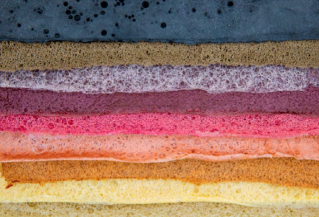
As a case study, the article examines the research project Material Ecology: Interspecies Biomaterialities in the Framework of Science, Art and Technology [EcoMat], in which a methodology is developed that reinterprets error, contingency and chance as creative catalysts. This methodological proposal draws on Wilfrid Sellars’ critical realism, the pedagogical precedents of the Bauhaus and Vkhutemas, the legacies of Process Art and Land Art, as well as contemporary collaborative practices. The process involves experimentation with organic waste, the classification of materials by format and the systematic cataloguing of results.
The findings suggest that materials themselves can act as an active agent in the generation of form and meaning, challenging the traditional creation–application paradigm and opening new pathways towards an artistic practice grounded in the interaction between matter and subject. In this sense, EcoMat introduces a methodological innovation by positioning artistic practice as a space for material and ecological transformation, where aesthetic experimentation intertwines with environmental, scientific and technological research.
Downloads
References
-Ahmad Sayuti, N.‘A., y Ahmed-Kristensen, S. (2020). Understanding emotional responses and perception within new creative practices of biological materials. En DS 105: Proceedings of the Sixth International Conference on Design Creativity (ICDC 2020) (pp. 144-151). https://doi.org/10.35199/icdc.2020.18
-Alarcón, J., Celaschi, F. y Celi, M. (2020). Diseño de materiales: del Basic design al Material Driven Design. Cuadernos del Centro de Estudios en Diseño y Comunicación. Ensayos, (114), 71-83. https://doi.org/10.18682/cdc.vi114.4115
-Ascuntar-Rivera M. C., Valbuena-Buitrago W. S. y Ayala-Gallardo F. R. (2023). Materiales Do it Yourself DiY: exploraciones emergentes sobre las cualidades expresivo-sensorio-emocionales. Arte, Individuo y Sociedad, 35(1), 139-156.
https://doi.org/10.5209/aris.81187
-Bak-Andersen, M. (2018). Cuando la materia conduce a la forma: el diseño guiado por el material (MDD, Material Driven Design) y la sostenibilidad [When matter leads to form: Material-driven design for sustainability]. Temes de disseny 34, 12-33.
-Bishop, C. (2024) Disordered Attention How we look at art and performance today. Verso Books.
-Bokov, A. (2020). Avant-garde as Method: Vkhutemas and the pedagogy of space, 1920-1930. Park Publishing.
-Cabrera, A., Nebe, K. y Megill, W. M. (2018). FabMaterials: a journey towards a tangible exploration of materials in prototyping. In Proceedings from the Fab14+ Fabricating Resilience Research Papers Stream, 127-139. https://doi.org/10.5281/zenodo.1344486
-Casciato, M., Fox, G. y Rochester, K. (2019, 10 de junio). Bauhaus. The Getty Research Institute. https://www.getty.edu/research/exhibitions_events/exhibitions/bauhaus/new_artist/matter_materials/
-Droste, M. (2002). Bauhaus, 1919-1933. Taschen.
-Galloway, A. (2012). The interface effect. Polity.
-Giaccardi, E. y Karana, E. (2015, April). Foundations of materials experience: An approach for HCI. In Proceedings of the 33rd Annual ACM Conference on Human Factors in Computing Systems, 2447-2456. https://doi.org/10.1145/2702123.2702337
-Haug, A. (2019). Acquiring materials knowledge in design education. International Journal of Technology and Design Education 29(2), 405-420. https://doi.org/10.1007/s10798-018-9445-4
-Jay, M. (2003). Devolver la mirada: La respuesta americana a la crítica francesa al ocularcentrismo, En J. L. Brea (Ed.), Estudios visuales. Ensayo, teoría y crítica de la cultura visual y el arte contemporáneo (Vol. 1, pp. 60-81). CENDEAC.
-Karana, E., Barati, B., Rognoli, V. y Zeeuw van der Laan, A. (2015). Material driven design (MDD): A method to design for material experiences. International Journal of Design, 9(2), 35-54.
-Karana, E., Hekkert, P. y Kandachar, P. (2009). Meanings of materials through sensorial properties and manufacturing processes. Materials & Design, 30(7), 2778-2784. https://doi.org/10.1016/j.matdes.2008.09.028
-Parisi, S., Rognoli, V. y Sonneveld, M. (2017). Material Tinkering. An inspirational approach for experiential learning and envisioning in product design education. The Design Journal, 20(sup1), S1167-S1184. https://doi.org/10.1080/14606925.2017.1353059
-Pedgley, O., Rognoli, V. y Karana, E. (2016). Materials experience as a foundation for materials and design education. International Journal of Technology and Design Education, 26(4), 613-630. https://doi.org/10.1007/s10798-015-9327-y
-Pizarro, E., Trigo, M., y Marcos, I. (Eds.) (2025) EcoMat: Ecología material. Manual práctico de materiales emergentes biobasados. Asociación EcoHabitar para una Cultura Regenerativa.
-Pizarro, E., Trigo, M., y Marcos, I. (Eds.) (2025) EcoMat: Ecología material. Archivo de materiales emergentes biobasados. Asociación EcoHabitar para una Cultura Regenerativa
-Rego Robles, M. Á. (2023). Visión estereoscópica en el pensamiento de Wilfrid Sellars: enfoques ontológicos a través del arte poscontemporáneo. Artnodes 32, 1-9.
https://doi.org/10.7238/artnodes.v0i32.410394
-Resnick, M., y Rosenbaum, E. (2013). Designing for Tinkerability. En M. Honey y D. E. Kanter (Eds.), Design, Make, Play. Growing the Next Generation of STEM Innovators (pp. 163-181). Routledge.
-Rognoli, V. (2020). Dynamism as an emerging materials experience for ICS materials. En V. Ferraro y A. Pasold (Eds.), Emerging materials & technologies (p. 105-114). Franco Angeli.
-Rognoli, V., Bianchini, M., Maffei, S. y Karana, E. (2015). DIY Materials. En Futurecraft (pp. 138-153). Springer. https://doi.org/10.1016/j.matdes.2015.07.020
-Rognoli, V., Salvia, G., & Levi, M. (2011). The aesthetic of interaction with materials for design. En DPPI ’11: Proceedings of the 2011 Conference on Designing Pleasurable Products and Interfaces (33, pp. 1-8). https://doi.org/10.1145/2347504.2347540
-Santulli, C. y Rognoli, V. (2020). Material tinkering for design education on waste upcycling. Design and Technology Education: An International Journal, 25(2), 50-73. https://doi.org/10.24377/DTEIJ.article1279
-Sellars, W. (1962). Philosophy and the Scientific Image of Man. Frontiers of Science and Philosophy. University of Pittsburgh Press.
-Sellars, W. (1963). Empiricism and the Philosophy of Mind. Routledge & Kegan Paul Ltd.
-Sörensen, C. A. y Rosén, T. (2021). A comparative case study of bio-based material development by designers using a DIY approach in a circular context. En Proceedings of the 23rd International Conference on Engineering and Product Design Education. https://doi.org/10.35199/EPDE.2021.91
-Teixeira, L. F. y Santos, N. S. (2024). Material driven design e logística reversa: Transformação de resíduos em biomateriais. In 5º Congresso Brasileiro de Pesquisa e Desenvolvimento em Design. https://doi.org/10.29327/5457226.1-408
-Veelaert, L., Du Bois, E., Moons, I., & Karana, E. (2020). Experiential characterization of materials in product design: A literature review. Materials & Design, 190, 1-16. https://doi.org/10.1016/j.matdes.2020.108543
Published
How to Cite
Issue
Section
License
Copyright (c) 2025 Esther Pizarro Juanas , Miguel Ángel Rego Robles

This work is licensed under a Creative Commons Attribution-ShareAlike 4.0 International License.